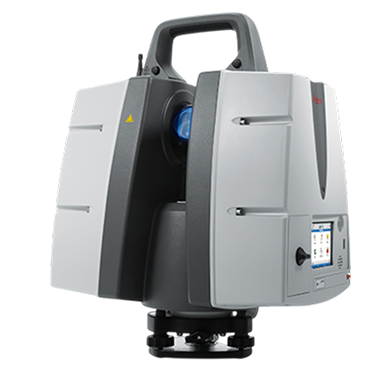
3D Laser scanners

advanced technology that captures the exact size, spatial position, colour, and Shape of environments using laser pulses that travel to surfaces and reflect back to the scanner
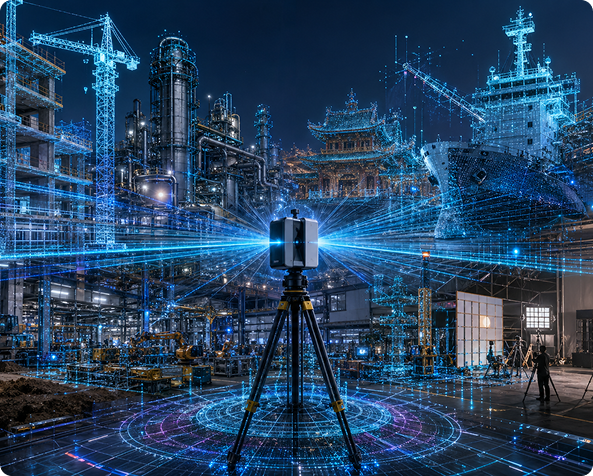
3D Laser Scanner Technology

3D Laser scanners

3D Laser scanners are an advanced technology that captures the exact size, spatial position, colour, and Shape of environments using laser pulses that travel to surfaces and reflect back to the scanner; by timing these pulses, the scanner computes accurate distance measurements for each point, and this forms a highly dense point cloud data and captures a high-definition 360-degree panoramic image

This has been widely used in 3D scanning of AEC, 3D scanning of Plant, 3D scanning of Factory, 3D scanning of Heritage Buildings, 3D scanning of Movie Sets, 3D Scanning of Shipbuilding, for Digital Twinning, Reality Capture, and As-Built Capture requirements.

At WildplantTS, as an authorised distributor of Leica Geosystems, we support clients in demonstrating the Leica Reality Capture Laser Scanner across India and provide post-sales support.

How it works

Step 1
Step 1

Emits laser pulses

Step 2
Step 2

Laser hits objects and reflects back

Step 3
Step 3

Return time is measured, and
the distance is calculated

Step 4
Step 4

Angles are recorded, X, Y, Z
points are generated

Step 5
Step 5

Millions of points form
a 3D point cloud

Our Products

Leica Geosystems Industry Leading Solutions
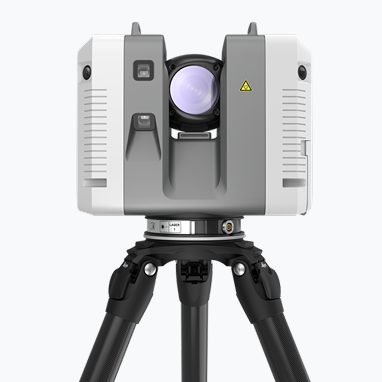
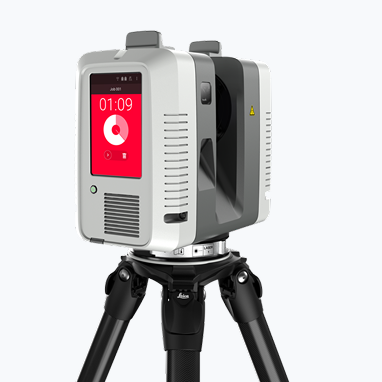
Leica RTC360

Leica RTC360

Fast, agile and precise 3D reality capture.

HIGH SPEED HDR IMAGING
Leica RTC360 LT

Leica RTC360 LT

Lightweight performance without compromise.

AEC VERSATILE
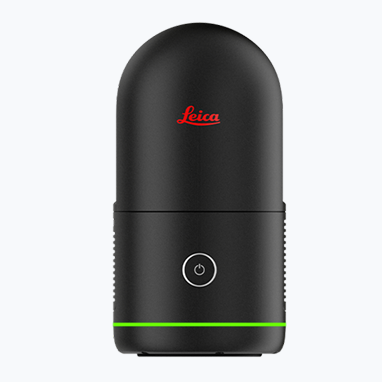
Leica BLK360 G2

Leica BLK360 G2

The next generation of the smallest laser scanner.

ULTRA COMPACT
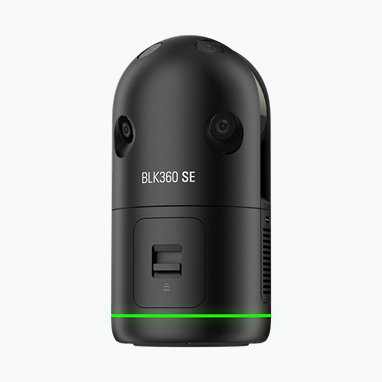
Leica BLK360 SE

Leica BLK360 SE

Special edition performance for reality capture.

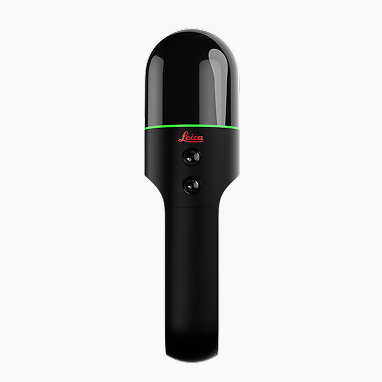
Leica BLK2GO

Leica BLK2GO

Handheld imaging laser scanner for mobility.

Leica P40 ScanStation

Leica P40 ScanStation

Long range, high accuracy industrial station.

Frequently Asked Questions

LiDAR - Light Detection and Ranging, laser scanning uses pulses to measure the distance between the scanner and the object. By capturing millions of points, it creates accurate representations of buildings, terrain and infrastructure. It is known as point clouds.

Lidar Laser scanner sends out high-speed laser pulses that reflect off surfaces and return to the sensor. It calculates the exact distance using the time it takes for each pulse to return and produces accurate 3D data of the environment.

LiDAR laser scanners are used in AEC(architecture, engineering, construction) surveying, mining, Transportation, utilities, forensics, and heritage documentation.

Common applications include as-built surveys, topographic mapping, BIM modelling, volume calculations, and deformation monitoring.

LiDAR laser scanners provide millimetre-level accuracy, which generally ranges from 1mm to 10mm, depending on the scanner specification and the nature of the site.

LiDAR laser scanners generally collect millions to billions of 3D points; each point captured represents the exact shape of the environment or infrastructure. This will be the base for creating 3D Models, Mesh surfaces, BIM modelling and CAD Drawings.

In the Traditional surveying method, lots of manual interventions are involved, but LiDAR scanning captures huge amounts of data in a very short time without many manual interventions and minimal site disruption.

Yes, LiDAR laser scanners are suitable for both indoor and outdoor use; they can generally scan even in 40 Degree temperatures. They are commonly used for building interiors, plants, industrial facilities and outdoor structures.

LiDAR laser-scanning process involved site observation -> Planning -> Capturing point clouds at multiple positions -> Onsite data registration (Stitching the multiple shots into a single coordinate) -> post-processing.

The project's duration depends on the site's size and complexity. Capturing point clouds can often be completed in days, and further post-processing may vary depending on the number of scans.

Common deliverables of LiDAR Laser scanning are point clouds and HD 360-degree images.

All the Laser scanners in the market are somehow best in their own unique specification, but before choosing a best LiDAR Laser Scanner, we need to consider factors such as accuracy, Scanning range, Resolution, Scan speed, portability, Onsite registration function.

Professional LiDAR laser scanners range from Rs. 25 Lakhs to 1 Cr, depending on the scanner's specifications.

There are many professional LiDAR scanners available in the market, known as Leica Geosystem, Faro Focus, Trimble, Artec 3D, and so on, but Leica Reality Capture is best among other brands in terms of data quality, Speed and its unique features.

We at WildplantTS can arrange a free onsite demonstration of the LiDAR Laser scanner. Fill the simple form to book your free demo.

In WildplantTS, we are providing onsite rentals of LiDAR Laser Scanner along with a certified resource. We charge on a day basis and also take on turnkey projects.

In General, LiDAR Laser Scanners will provide point cloud output, which is the foundation of CAD or BIM modelling and Mesh surface creation. So, after scanning, 3D Model generation is a separate process.

Book your demo

Experience the precision of Leica Geosystems LiDAR technology firsthand with our expert team.